
Looking for kids bunk bed room ideas that make the most of your space without sacrificing style? Bunk beds can transform a shared bedroom into a practical, colorful retreat by freeing floor space for play, homework and storage. The secret is choosing a layout that fits the room and decorating it in a way that reflects each child’s personality.
From timeless white frames to custom built-ins, this guide explores 20 bunk bed bedroom designs for siblings, small rooms and occasional guests. Each idea includes a visual concept and practical styling tips. The AI-generated images are decorating inspiration, not certified furniture designs; always verify the safety of the actual bed and room layout before purchasing or building anything.
Planning a shared bedroom from scratch? Start with our bedroom ideas for two kids, then use the designs below to narrow down your preferred style.
1. Classic White Bunk Bed with Soft Pastels
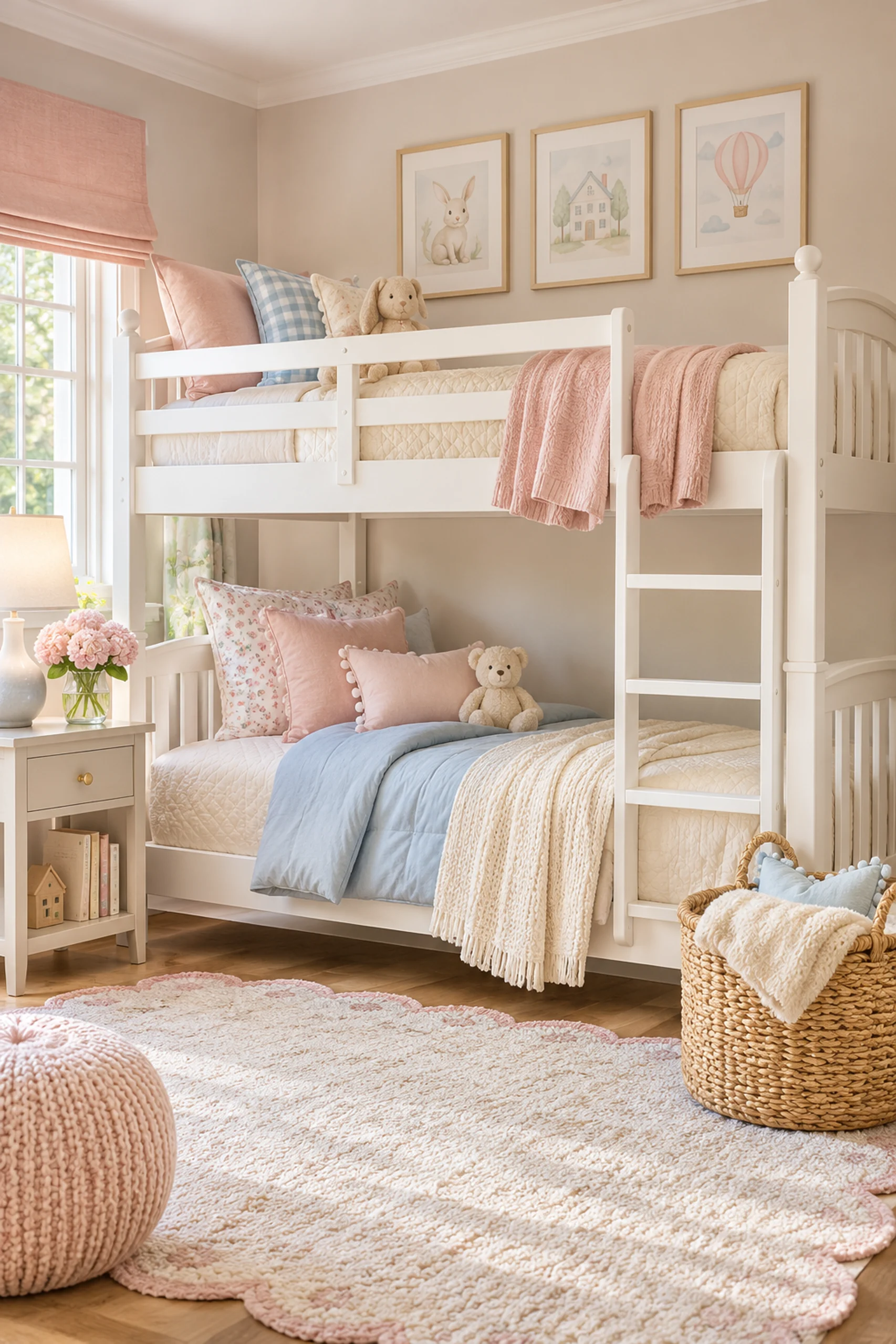
A white bunk bed is an easy starting point for a cheerful shared bedroom. Its clean finish works with almost any bedding, making it simple to change the room as children’s interests evolve. Pair it with dusty pink, sky blue or muted lavender textiles and use a neutral wall color so the bed remains the focal point.
Give each child a different fitted sheet or pillow color while repeating the same accent shade throughout the room. Add a washable rug, a low toy basket and one or two lightweight prints on a distant wall. Avoid placing shelves or heavy decorations above either sleeping space. This approach is particularly useful when siblings have different tastes but want the room to feel coordinated.
2. Natural Wood Bunk Beds for a Scandinavian Look
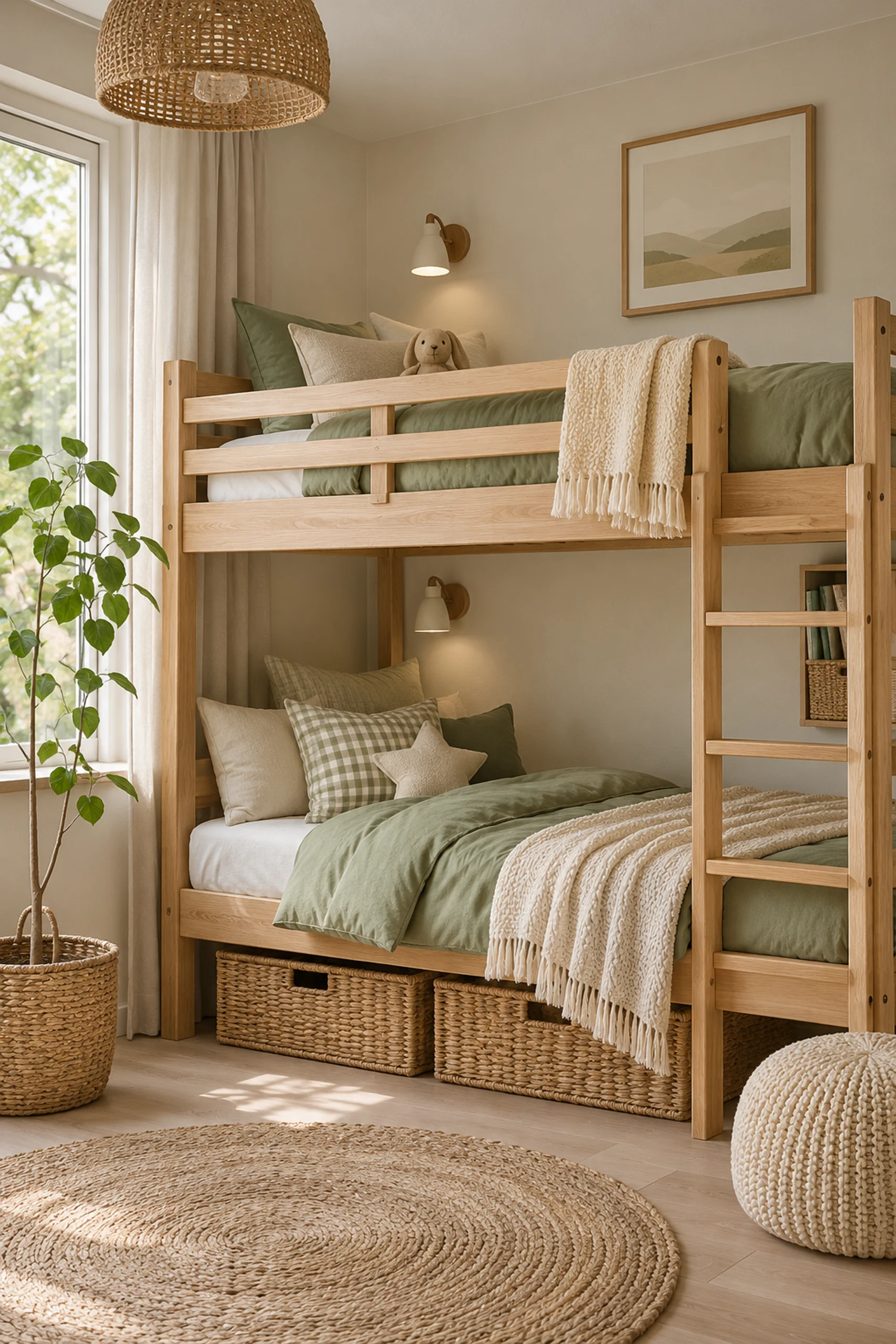
A natural timber frame brings warmth to a small bedroom without relying on bright paint. Combine light wood with white walls, sage green bedding and oatmeal-colored curtains to create a relaxed Scandinavian-inspired space. The grain of the wood provides enough texture that you can keep other patterns minimal.
Use matching baskets beneath the bed to organize spare sheets, pajamas and toys. Choose a frame with a smooth finish and clearly documented mattress requirements rather than relying on appearance alone. A simple bedside cabinet beside the lower bunk provides a convenient spot for books. If you want the room to grow with your children, this understated palette is especially easy to update.
3. Navy Nautical Bunk Bed Bedroom
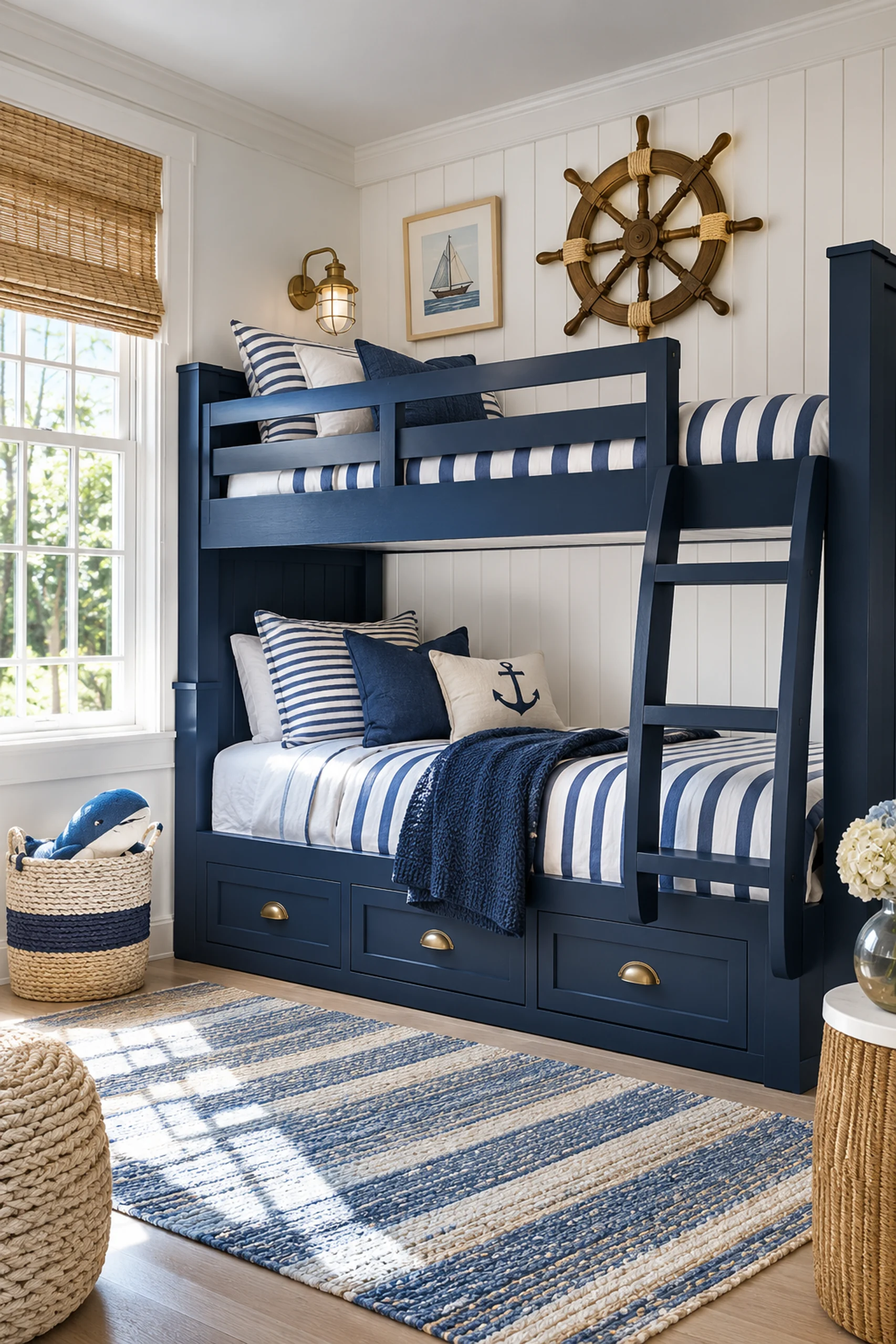
Navy blue and crisp white give bunk beds a timeless nautical character. A striped duvet, a few red accents and coastal artwork can suggest the seaside without turning the bedroom into a heavily themed set. Use pale walls to balance the dark bed frame, especially if the room receives limited daylight.
Keep nautical wall accessories flat, lightweight and well away from the upper bunk; ropes, hanging nets and cords should never be attached to the bed. A blue-and-white rug can visually connect both sleeping areas. This look suits school-age siblings who want a playful theme that still feels mature enough for future years.
4. Sage Green Built-In Bunk Beds
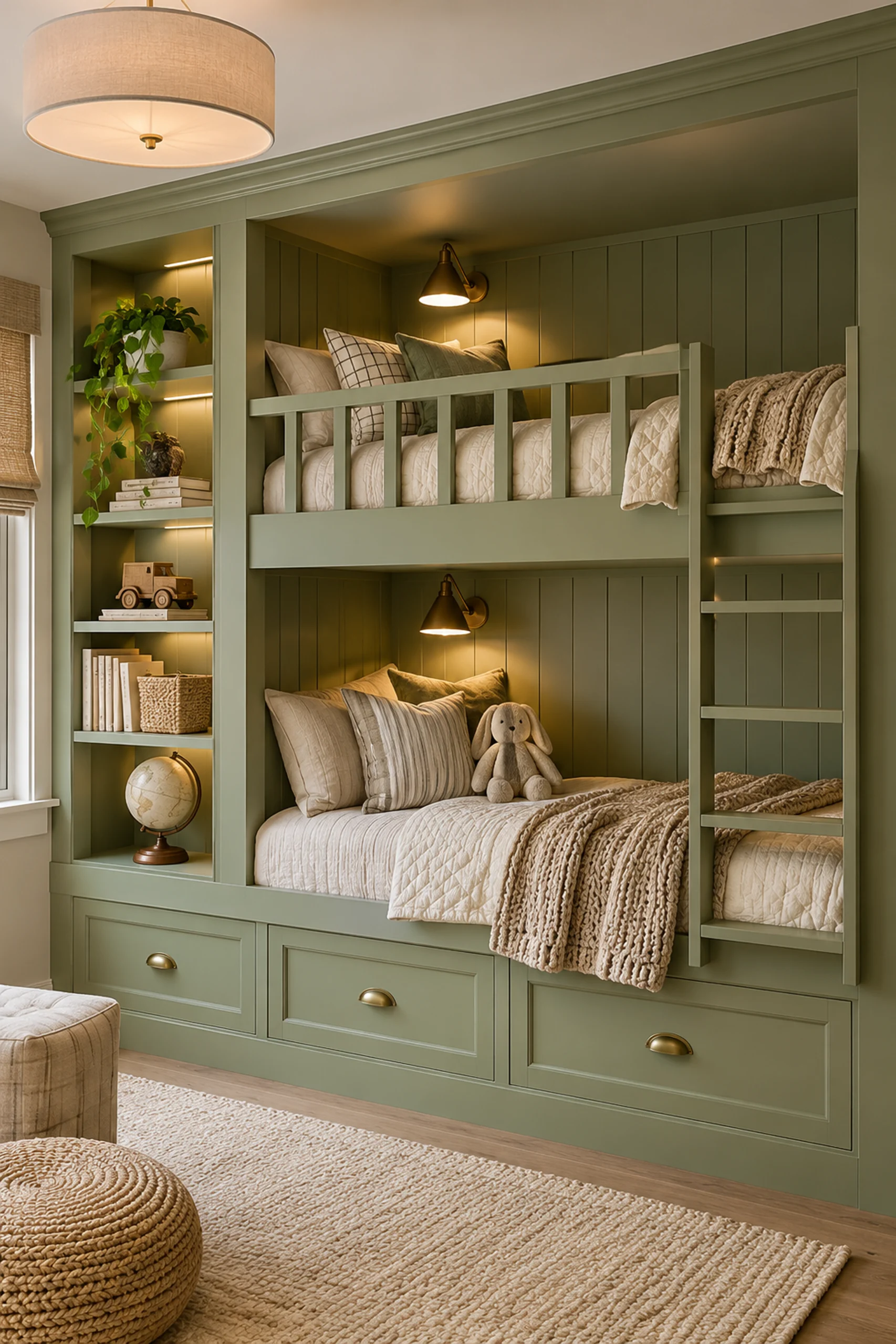
Built-in bunks can make an awkward alcove feel intentional. Paint the cabinetry a muted sage green and use natural wood or brass-toned drawer pulls for a soft, sophisticated finish. Deep drawers at floor level help hide the clutter that often collects in children’s rooms.
Plan accessible storage for each child before ordering custom joinery. A cabinetmaker should work with a qualified designer or appropriate professional to ensure the bed structure, guardrails, access and mattress openings satisfy applicable safety requirements. Keep decorative ledges clear of heavy objects and provide ventilation and unobstructed access. Use independent wall lighting only where it can be installed safely. The result should prioritize reliable construction over a picture-perfect appearance.
5. Compact Bunk Beds with a Bookshelf
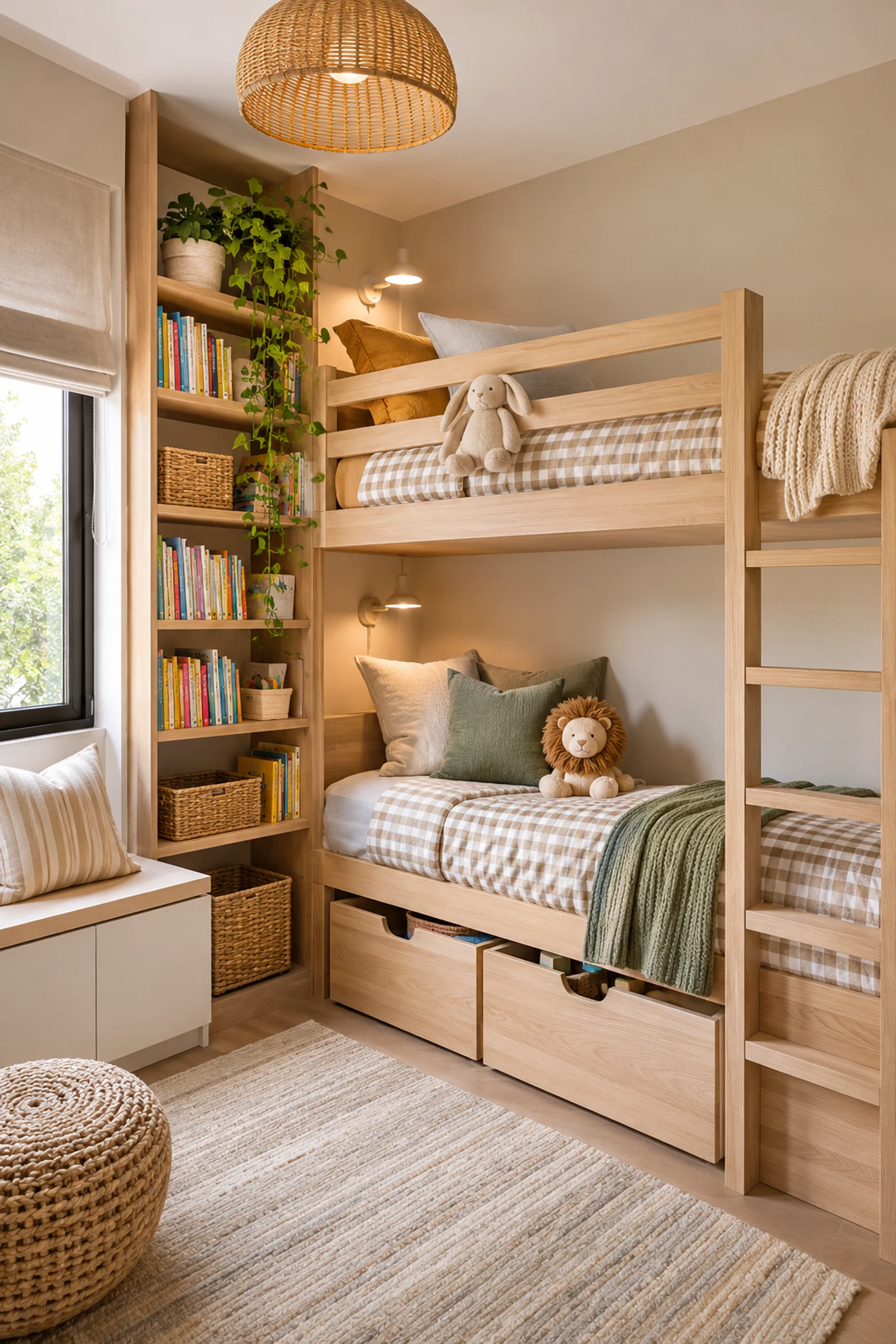
When a narrow bedroom needs to accommodate two children, stacking twin beds can free space for a bookcase and an open walkway. Choose a compact frame with a ladder that fits the room without interfering with doors or drawers. A light wood finish and warm white walls help prevent the furniture from dominating the space.
Position bookshelves away from the bed so children cannot climb from the upper bunk onto them, and secure tall furniture to the wall according to its instructions. Place favorite books on lower shelves and store occasional items higher up. For additional ways to use a tight floor plan, explore our box room bedroom ideas for kids. This design works best when every piece of furniture has a clearly defined purpose.
6. Bunk Bed with Storage Stairs
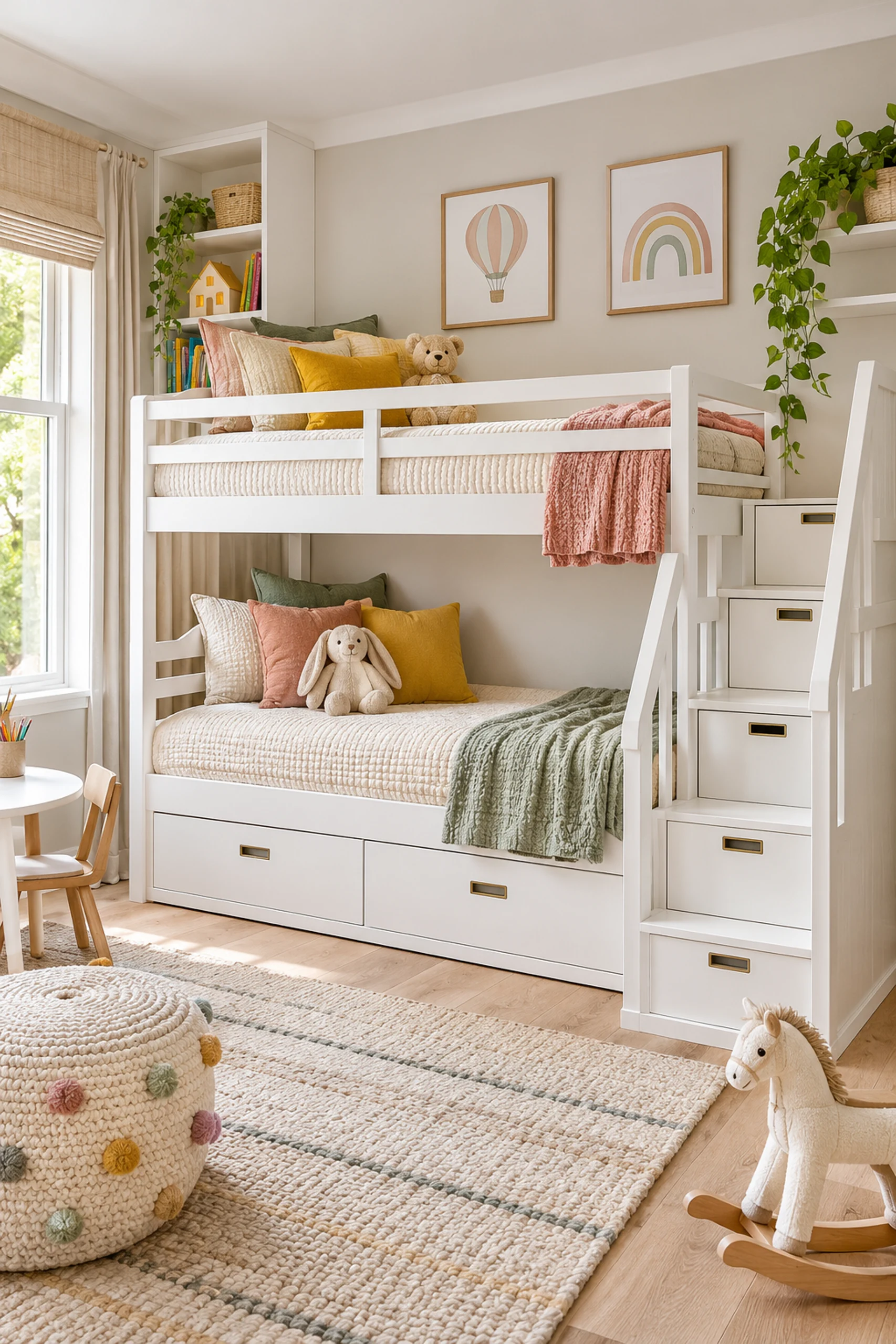
A bunk bed with manufacturer-designed stairs can combine sleeping space and practical storage in one furniture piece. Drawers built into the staircase offer places for folded clothes, bedding and accessories. White painted wood pairs nicely with natural stair treads and warm neutral walls.
Measure the staircase footprint carefully: stairs often take up more floor area than a ladder, and the room must still have clear circulation. Choose a model with secure access and appropriate handholds, and teach children to use only the intended climbing route. Keep drawer fronts closed when not in use. For more ideas, visit our kids bedroom storage guide. Avoid converting ordinary storage cabinets into improvised steps.
7. L-Shaped Corner Bunk Bed Layout
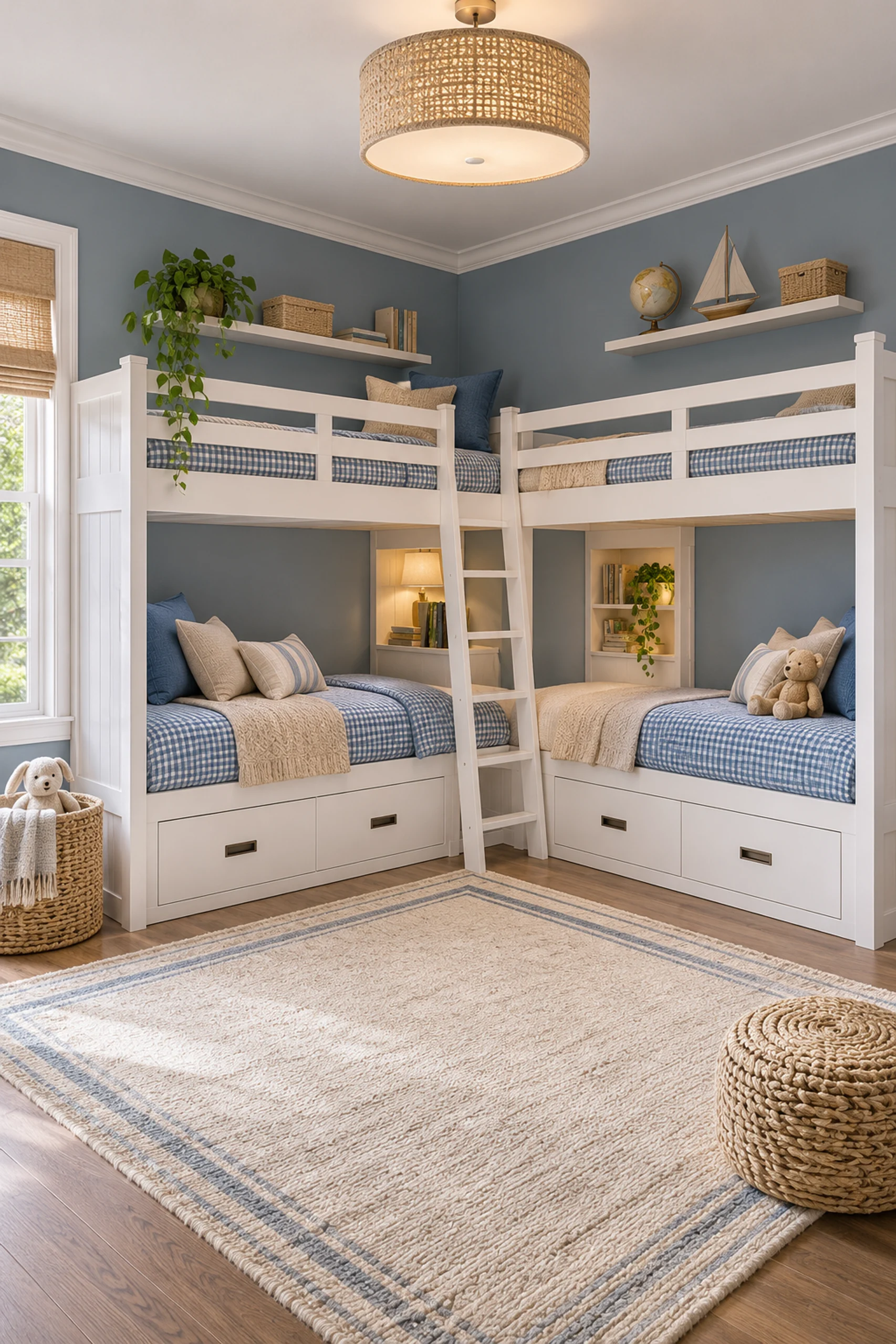
An L-shaped arrangement can take advantage of two adjoining walls while leaving the center of the room open. Coordinated white frames and blue bedding create a unified look even when several sleeping spaces share the corner. Use matching drawer handles and a consistent wall color to tie the layout together.
This arrangement requires more planning than a conventional stacked bunk. Measure both walls and check the space between access points, windows and doors. Use a purpose-designed system rather than attaching separate beds together yourself. Assign a drawer or cupboard to each sleeper so personal possessions do not spill into shared areas. It is a practical direction for larger sibling rooms when the layout allows safe access to every bed.
8. Twin-Over-Full Bunk Bed for Different Ages
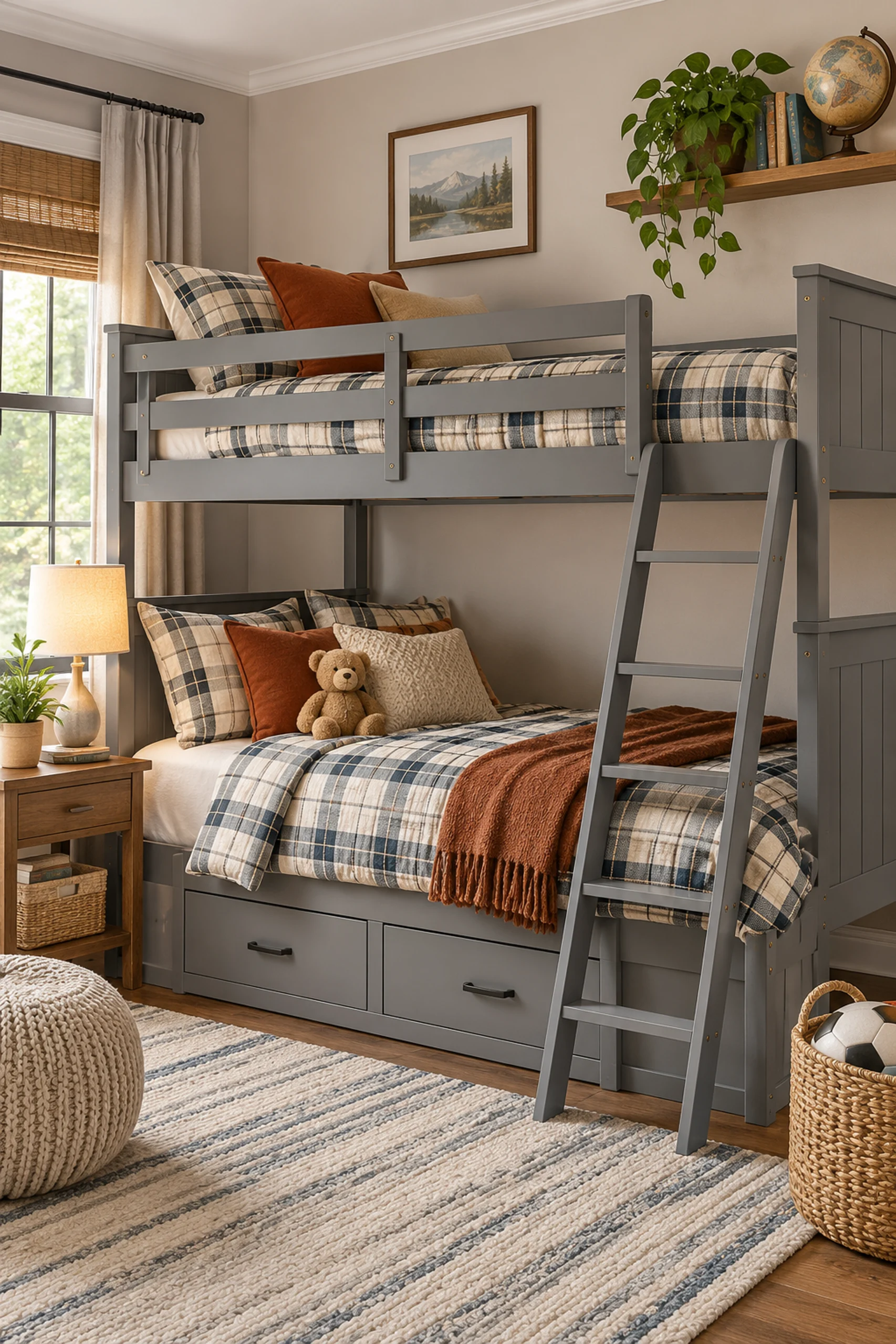
A twin-over-full bunk bed offers a wider lower mattress and a compact upper sleeping area. It can suit siblings with different space needs or a family that occasionally hosts an overnight guest. Gray furniture, plaid bedding and a mustard accent pillow create a cozy look without feeling too young.
Check the manufacturer’s weight limits for both bunks independently; a larger lower mattress does not automatically mean the frame supports any weight. Measure the wider lower frame before adding a dresser or desk. Assign the upper bunk only to an appropriate child aged six or older who can use it safely. Choose bedding that fits each mattress precisely, and leave sufficient room to climb and change sheets.
9. Coastal White Bunk Beds with Ocean Colors
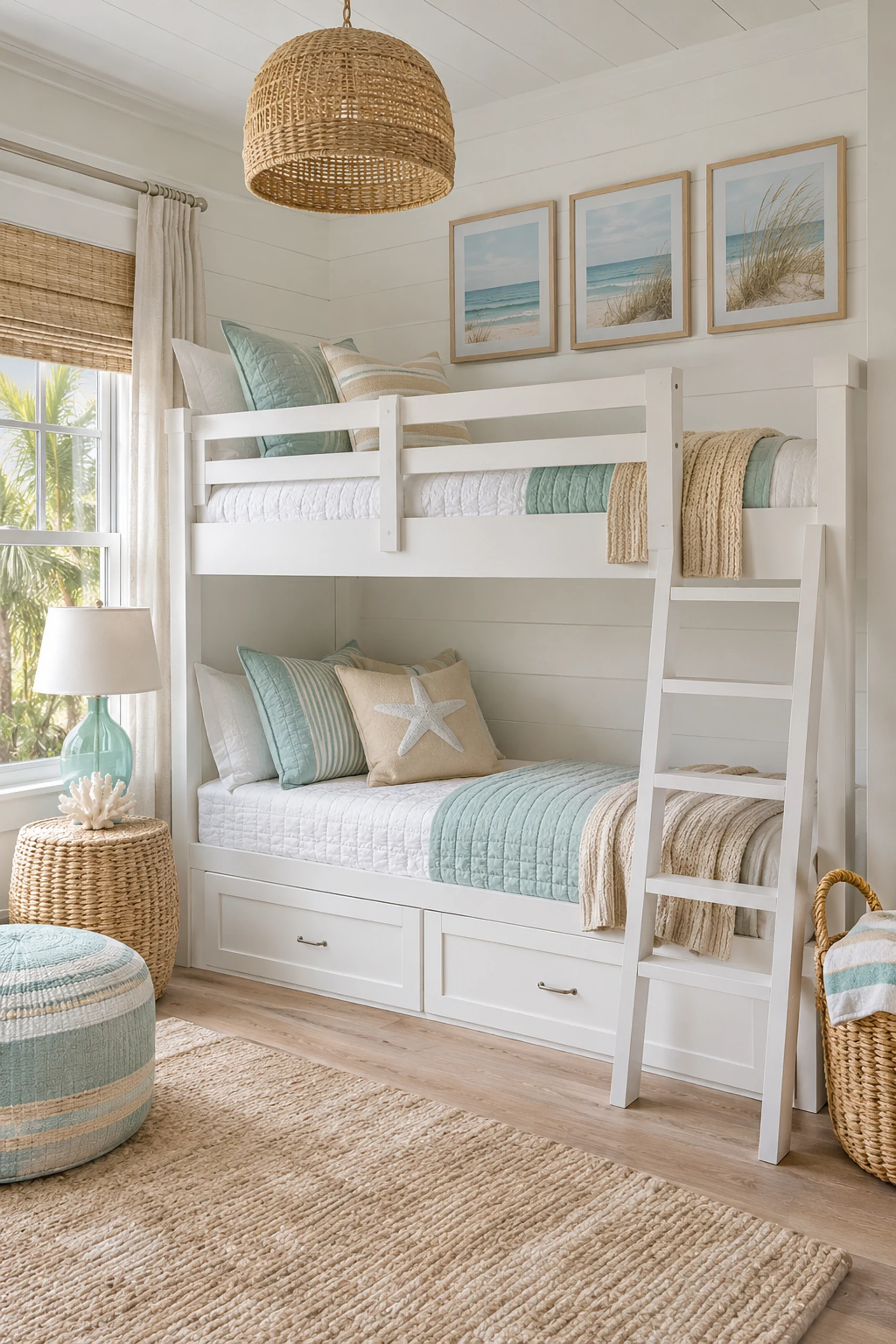
Bring a relaxed beach-house feeling to a children’s room with white furniture, pale aqua bedding and sandy beige textiles. Subtle wave patterns or framed coastal prints can introduce a theme without requiring a major renovation. Light-colored curtains and pale flooring help the room feel open.
Use a striped or textured rug in the center of the room, keeping it clear of the access route. Secure all large decorative items and avoid propping tall objects near the bunks, even if they look appealing in a design rendering. Select washable bedding and keep beach-inspired accessories on a stable dresser. The calm palette is ideal for siblings who enjoy ocean colors but prefer a less dramatic room.
10. Industrial Black Metal Bunk Beds
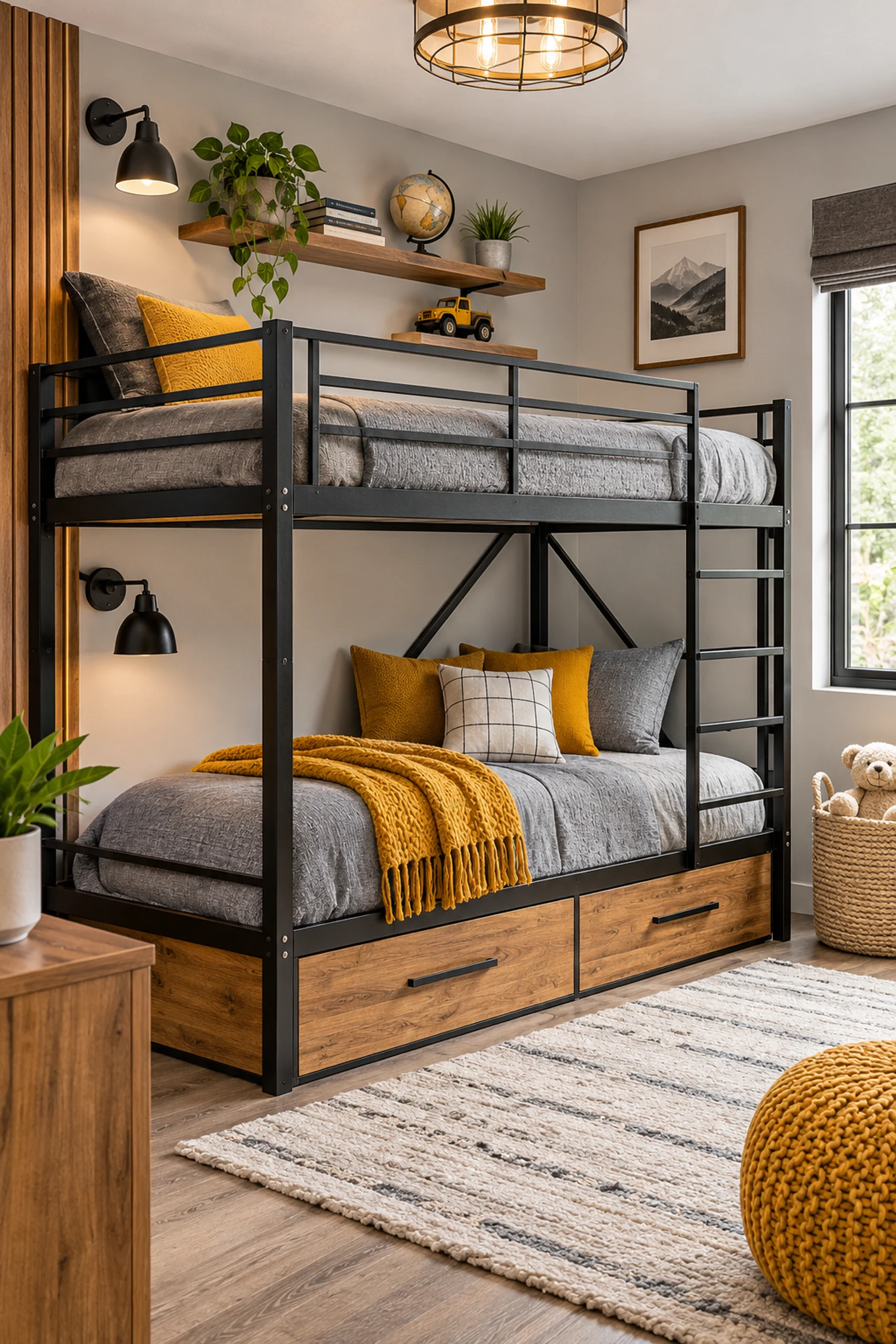
A black metal bunk frame adds contrast and clean architectural lines to a contemporary bedroom. Soften the dark finish with gray blankets, mustard yellow accents and a warm natural wood dresser. A simple geometric rug can make the furniture feel grounded and help define the sleeping zone.
Look for a sturdy frame with smooth edges, secure connections and manufacturer-provided mattress specifications. Check fasteners regularly and address any looseness or movement before children use the bed. Avoid hanging bags or decorations from metal rails. This design is especially appealing for older children who prefer an understated look, and it can be refreshed with new textiles rather than replaced when their tastes change.
11. Playful Pastel Color-Block Bunk Room
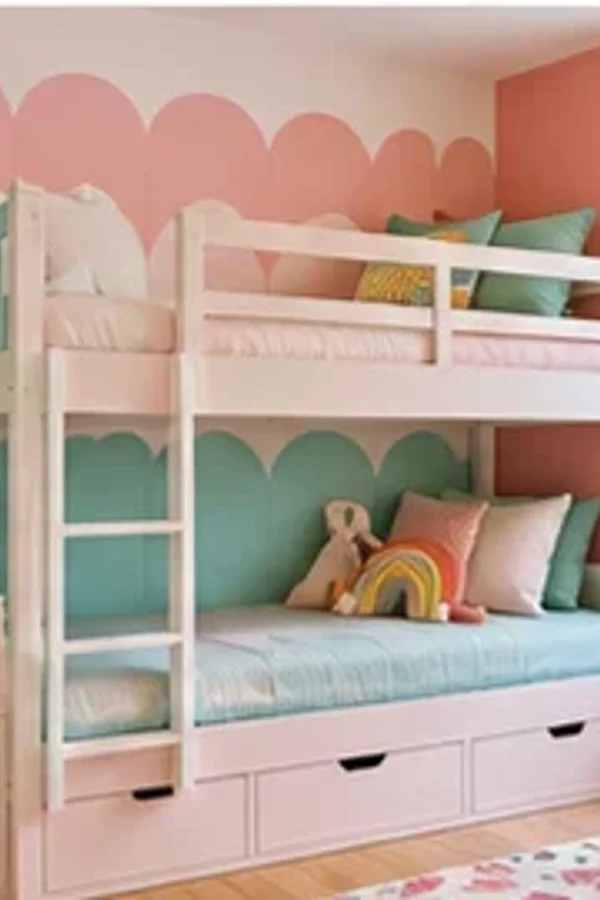
Color-blocking is a playful way to distinguish sleeping zones without buying different furniture. Paint broad scallops or simple geometric shapes in mint, dusty pink and cream, then repeat those shades in bedding. A neutral frame prevents the walls from feeling overwhelming.
Choose a wall paint suitable for interior use and complete painting and ventilation before children return to the room. Keep painted patterns rather than attached ornaments near the upper bunk. Let siblings choose one accent color each, with a shared neutral shade bringing everything together. If you need more inspiration, our kids room paint ideas offer additional palettes and decorating approaches.
12. Woodland-Themed Bunk Bed Room
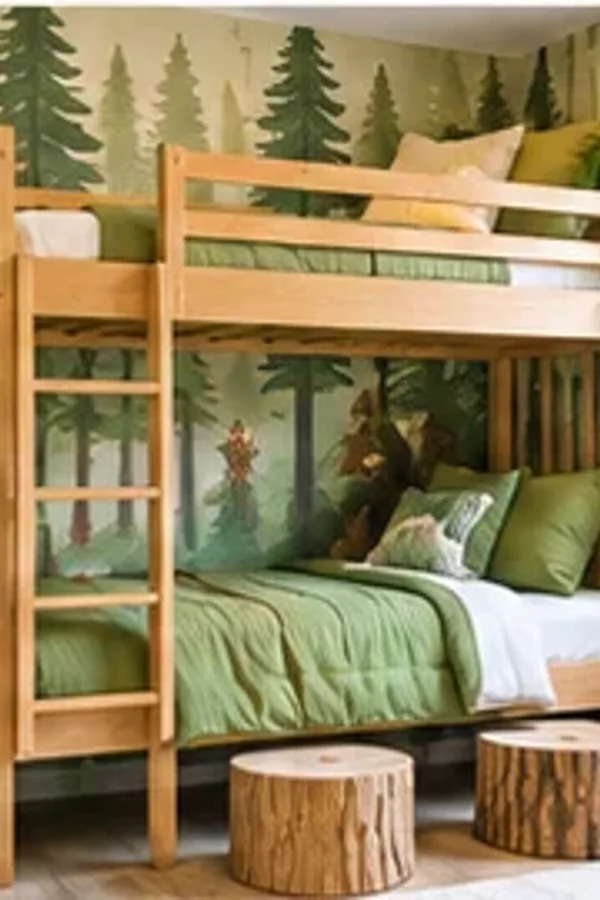
A woodland bedroom can feel like a peaceful forest retreat. Start with a natural wood bunk bed, moss green bedding and a mural featuring trees or gentle mountain shapes. Earthy neutrals keep the design suitable for a variety of ages and preferences.
Use a flat painted mural rather than artificial vines, branches or fabric canopies near the sleeping areas. Choose stable furniture, keep the ladder route open and use forest-inspired prints elsewhere in the room. A low book basket or a woodland-patterned rug adds personality without creating hazards. The theme is inexpensive to refresh if you focus on paint and textiles instead of buying specialty furniture.
13. Warm Terracotta Desert-Inspired Bunks
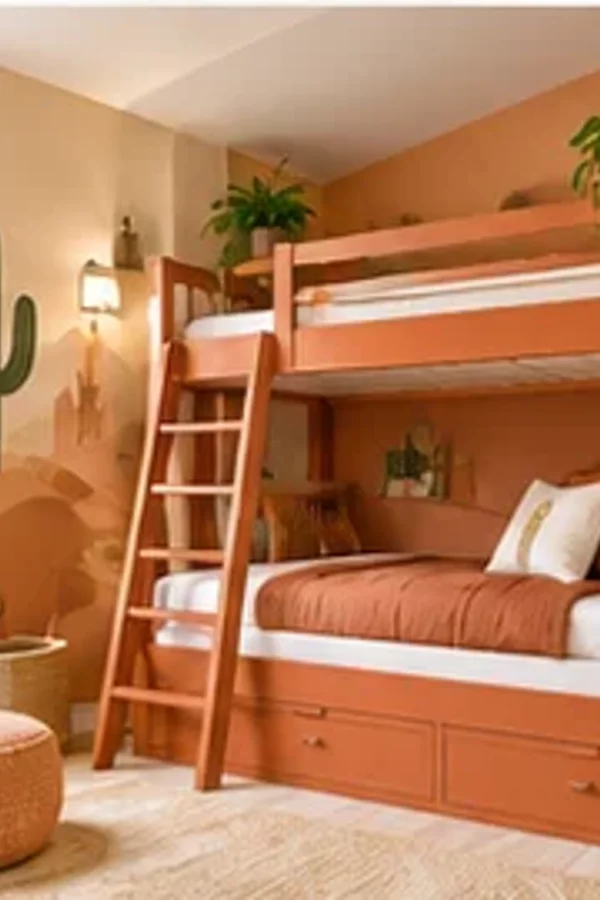
Terracotta, clay and sandy beige create a warm desert-inspired bedroom that feels both cozy and cheerful. A painted accent wall with simple cactus or mountain silhouettes can complement a warm-toned bunk frame. Cream bedding softens the rich colors and prevents the room from appearing too dark.
Choose washable cushion covers for the lower sleeping area and keep the upper bunk free of excessive accessories. Consider a pale natural-fiber-look rug with secure backing and a simple closed storage cabinet. If painting furniture, follow the manufacturer’s guidance for compatible finishes rather than changing structural parts. This palette works particularly well with natural daylight and light flooring.
14. Gray Built-In Bunks with Recessed Shelving
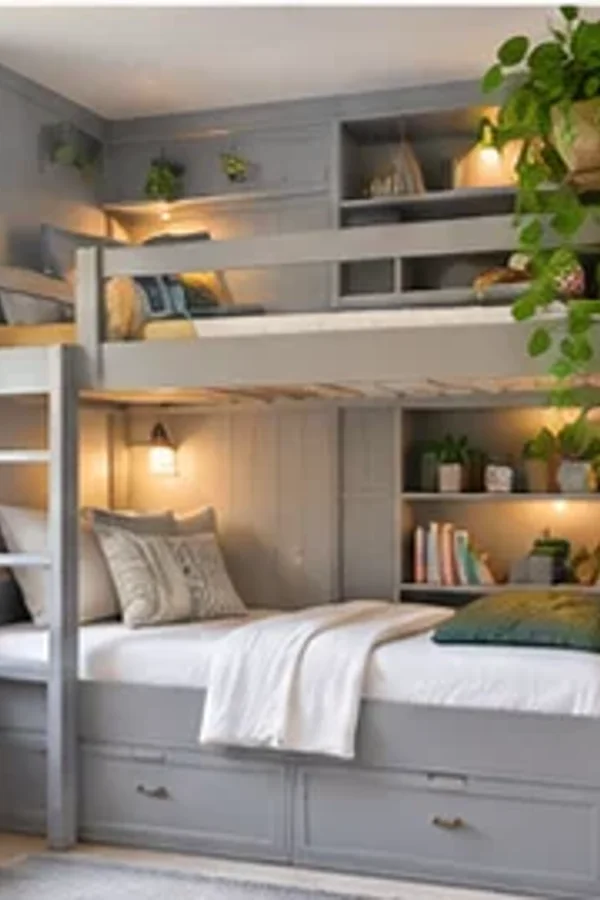
Soft gray built-in bunk beds offer a streamlined look for a busy family bedroom. White bedding and small green accents brighten the cabinetry, while recessed storage can help keep possessions off the floor. A consistent finish across drawers and trim gives the room a custom appearance.
Plan the bed and storage together with a qualified professional. Avoid reachable cords, protruding hardware and heavy objects above sleeping spaces. Any electrical lighting should be appropriately installed and kept clear of bedding. Use accessible lower drawers for personal possessions rather than crowded shelves within the upper sleeping area. The aim is a room that is easier to maintain and inspect, not simply one that resembles a hotel.
15. Rustic Farmhouse Bunk Bed Bedroom
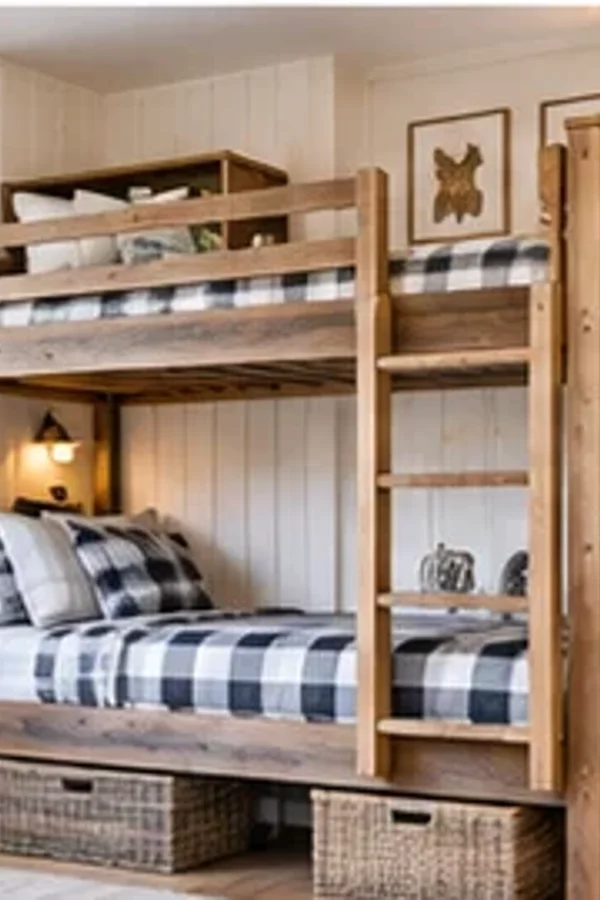
A rustic wooden bunk frame pairs beautifully with plaid blankets, warm cream walls and natural textures. The farmhouse look can feel inviting without requiring antique furniture. Choose a new or properly inspected bed with a farmhouse-inspired finish rather than relying on an old frame with unknown structural condition.
Use matching woven-look bins for storage, and repeat black or bronze hardware in the dresser for consistency. Avoid splintered wood, decorative protrusions or DIY additions to the bed. Flat wall art and a simple washable rug are enough to establish the style. This look is a good choice for families who enjoy cozy cabin interiors and want a flexible neutral foundation.
16. Low-Profile Wooden Bunk Beds with Drawers
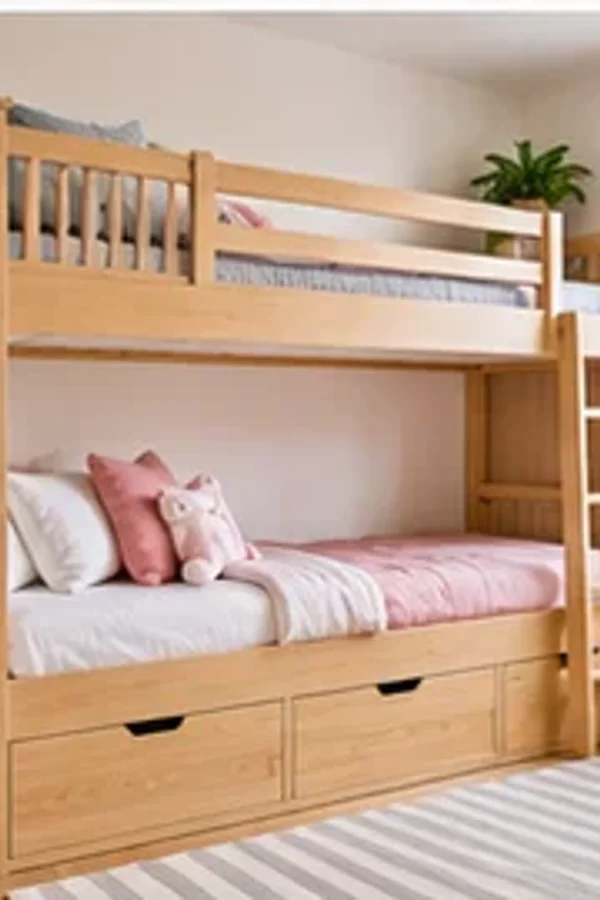
A lower-profile bunk bed can reduce the visual bulk of a stacked arrangement and may be worth considering in a room with a modest ceiling height. Natural wood and pale bedding keep the room light, while underbed drawers provide valuable storage for clothes and seasonal bedding.
A low-profile design does not make an upper bunk appropriate for a child younger than six. Check the exact frame dimensions and mattress thickness limits, and measure the headroom above both beds before purchasing. Keep drawers accessible without blocking the ladder. If neither child is ready for the upper bunk, use separate floor-level sleeping arrangements instead. Never remove or modify guardrails simply to fit a low ceiling.
17. Bunk Bed with a Dedicated Study Desk
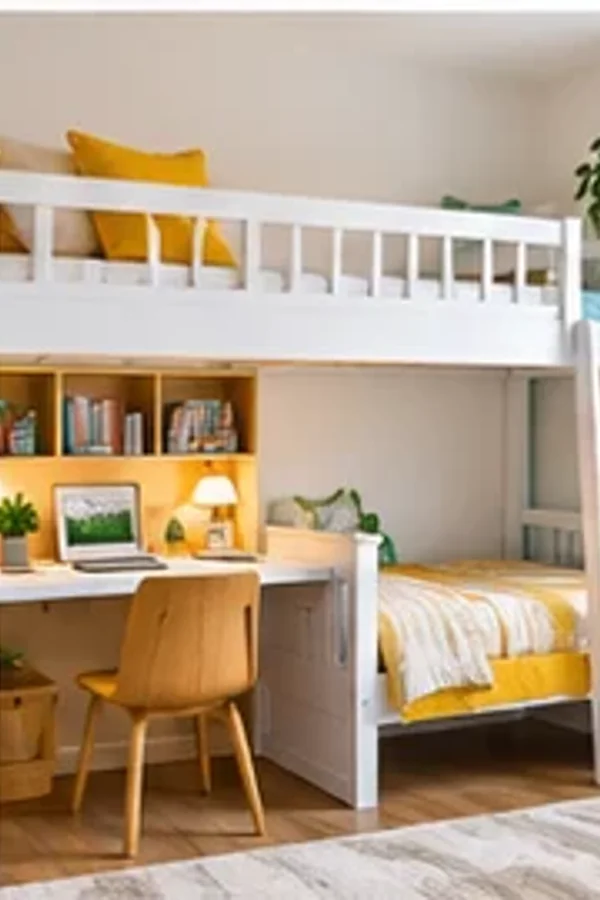
Combining sleeping and studying zones can make a school-age bedroom more efficient. A purpose-designed bunk or loft-and-bed system with an integrated desk offers a defined place for homework while leaving more floor space available. White furniture and mustard or teal accents create a lively but uncluttered atmosphere.
Choose a desk setup with adequate working space, a comfortable chair and appropriate lighting. Route electrical cords away from the bed and climbing area, and ensure the desk cannot be used as an unintended route to the upper bunk. Keep stationery in small organizers and place books within easy reach of the seated child. A separate freestanding desk may be preferable if the integrated design compromises circulation or safety.
18. Attic Bunk Bed Room Under a Sloped Ceiling
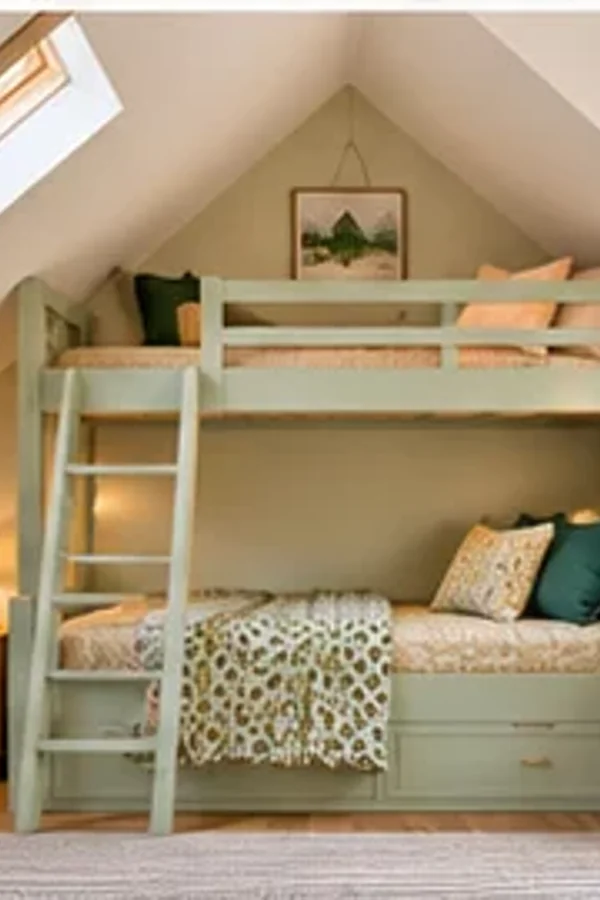
An attic bedroom can be charming, with sloped ceilings, skylights and cozy corners. A muted green bunk frame and pale walls can complement the architecture, but the layout must be planned around usable headroom rather than simply squeezing a tall bed into the space.
Measure ceiling clearance at the actual upper mattress position and keep bunks away from opening windows, skylights, low beams and fixtures. If adequate headroom or safe access cannot be achieved, choose two low beds or a trundle arrangement instead. Place storage in the lowest sections of the room and reserve the taller area for movement. Find further inspiration in our attic bedroom ideas for kids.
19. Four-Bed Bunk Room for Siblings and Guests
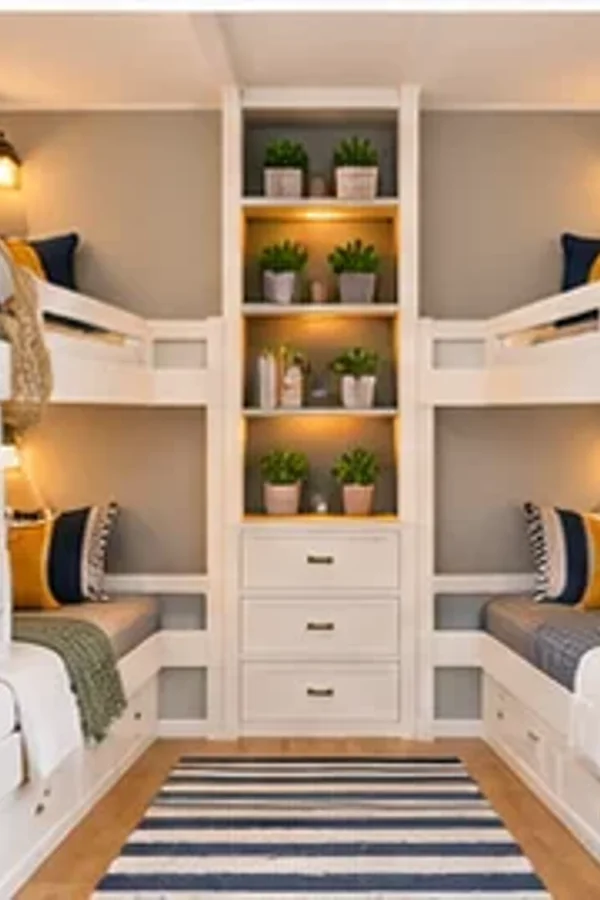
Two coordinated bunk beds can turn a spacious shared room into a flexible sleeping area for several family members. Matching frames, navy and white linens and central storage create a tidy, unified appearance. Individual bedding accents help children recognize their own spaces.
Leave unobstructed walking paths and check that each upper bunk can be accessed independently. Provide one personal storage area per sleeper, rather than expecting everyone to share a single drawer. Children younger than six must stay off upper bunks, including during visits. For additional layout options, see our shared bedroom ideas for three kids. More beds are only worthwhile if there is enough room for safe circulation.
20. Kids Bunk Bed with a Pull-Out Trundle
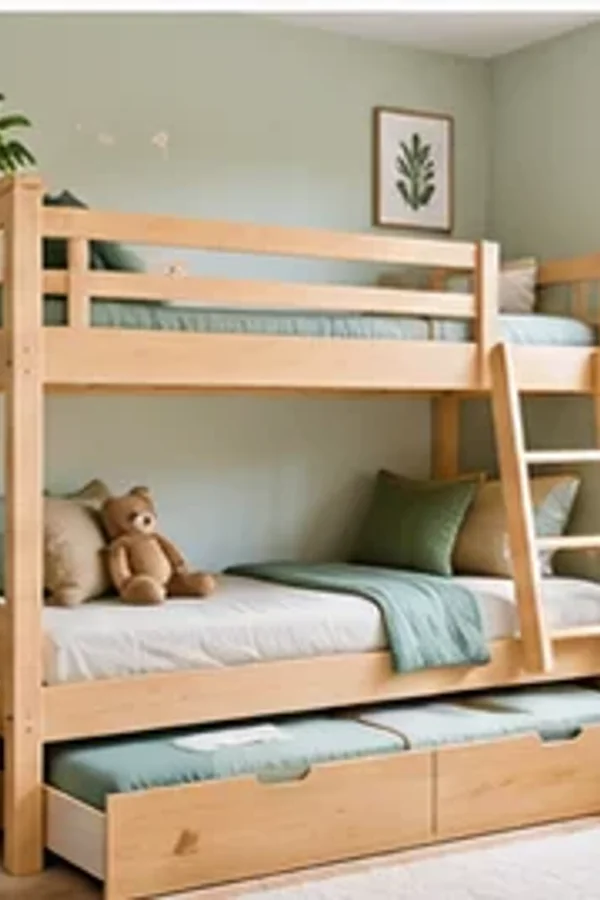
A bunk bed with a trundle provides a third sleeping surface without permanently taking up extra floor space. A natural wood frame and soft green bedding make the arrangement feel calm and versatile. It is particularly useful for occasional sleepovers when a separate guest bed would crowd the room.
Check the trundle’s mattress and weight requirements, and measure the room with the trundle fully extended. It must not obstruct doors, the upper bunk’s access route or an emergency exit. Choose a model designed to accommodate the trundle rather than adding one to an incompatible frame. Store extra bedding in a separate drawer so the bed is easy to prepare. When not needed, slide the trundle away to reclaim the floor space.
How to Choose the Best Bunk Bed for a Kids Room
Start by measuring the room, including ceiling height, door swings and the space needed for climbing and making the beds. Compare the manufacturer’s overall dimensions rather than assuming every twin bunk takes up the same footprint. A conventional twin-over-twin design suits many shared rooms, while staircase models need additional width and trundles need clear floor space when extended.
Decide what your family needs most: storage, flexibility, extra sleeping space or room for a study desk. Choose durable finishes and a simple color palette before investing in themed accessories. Give each child a storage zone and a say in their bedding. A room that is easy to tidy will be more enjoyable than one filled with decorative objects.
Essential Bunk Bed Safety Tips
Safety comes before style. The U.S. Consumer Product Safety Commission provides guidance on bunk bed requirements, including upper guardrails on both sides and guardrail height of at least five inches above the mattress surface. Choose a compliant product, use the exact mattress dimensions and thickness specified by the manufacturer, and follow its assembly and maintenance instructions.
The U.S. bunk bed instructions rule specifies that children under six must not use the upper bunk, only one person may occupy it at a time, and children must use the ladder rather than jumping or climbing elsewhere. Keep cords, hanging decorations and ceiling fans away from bunks, prohibit rough play, and regularly inspect the frame, fasteners and access points. A child who cannot climb safely should use a floor-level bed.
Frequently Asked Questions
What is the best bunk bed for a small kids bedroom?
A compact twin-over-twin model often uses floor space efficiently. Measure the complete frame, access route and ceiling clearance before ordering.
How can I decorate a shared bunk bed room for boys and girls?
Choose a neutral base such as white, natural wood or sage and let each child personalize their bedding and storage. Avoid hanging accessories on the bed.
Can a five-year-old sleep in the top bunk?
No. U.S. safety guidance prohibits children younger than six from using the upper bunk. Older children also need the ability to use the access route safely.
Are built-in bunk beds a good idea?
They can be useful for awkward layouts and extra storage, but custom designs require careful professional planning for structural integrity, safe openings, guardrails and access.
How can I organize a bunk bed room?
Assign personal drawers, use accessible bins and keep pathways clear. Store seldom-used items in a separate cabinet rather than overcrowding sleeping areas.
How do I make a bunk room look bigger?
Use light wall colors, coordinated bedding and furniture scaled to the room. Avoid blocking windows or adding unnecessary bulky furniture.
Final Thoughts
The best kids bunk bed room ideas combine a layout that genuinely fits the space, dependable furniture and decorations that children love. Whether you prefer a Scandinavian wood frame, a colorful shared bedroom or a custom storage solution, start with safety and function. Choose timeless foundations and change inexpensive textiles as interests evolve. With thoughtful planning, a bunk room can become an organized, welcoming space that supports everyday family life.